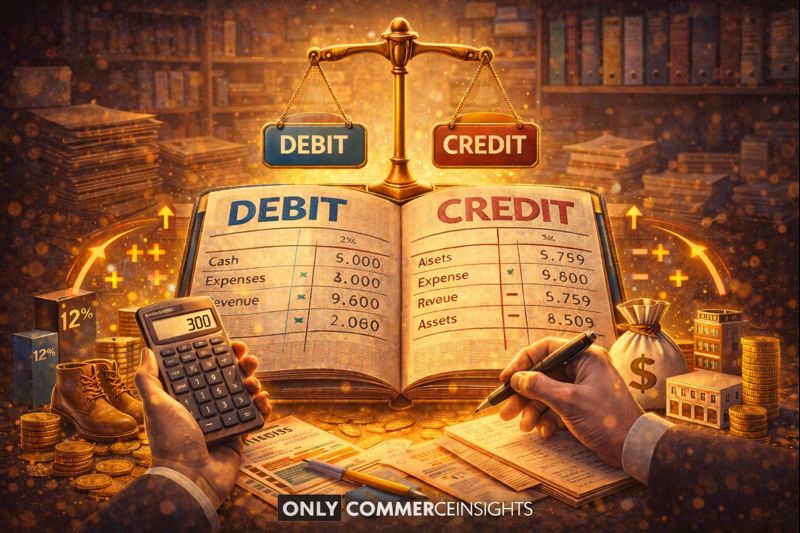

Debit and credit are the foundation of all accounting entries.
This article explains how debit and credit work in accounting using simple rules and examples, helping beginners clearly understand how transactions are recorded.
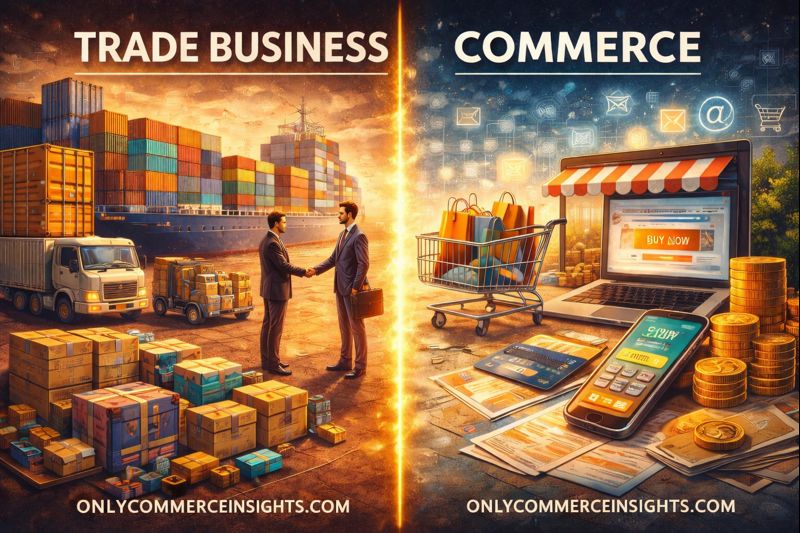
Trade, business, and commerce are closely related—but they are not the same.
This article explains the difference between trade, business, and commerce in simple terms, helping you understand how goods move from producers to consumers.

A company can show profits on paper—and still run out of cash.
This article explains the difference between cash flow and profit, why both matter, and how understanding this gap is critical for business survival and smart investing.

A country’s budget shows how the government plans to earn and spend public money.
This article explains the meaning of a country budget, its major components, and how revenues, expenditures, deficits, and debt are calculated in a simple way.

Depreciation shows how the value of assets decreases over time due to use, wear, and obsolescence.
This complete guide explains what depreciation means, the main methods of depreciation, and simple examples to help you understand how businesses record asset value.

Every choice we make comes with a hidden cost—the opportunity we give up.
This article explains opportunity cost with simple real-life examples, helping you understand how everyday decisions affect money, time, and long-term outcomes.