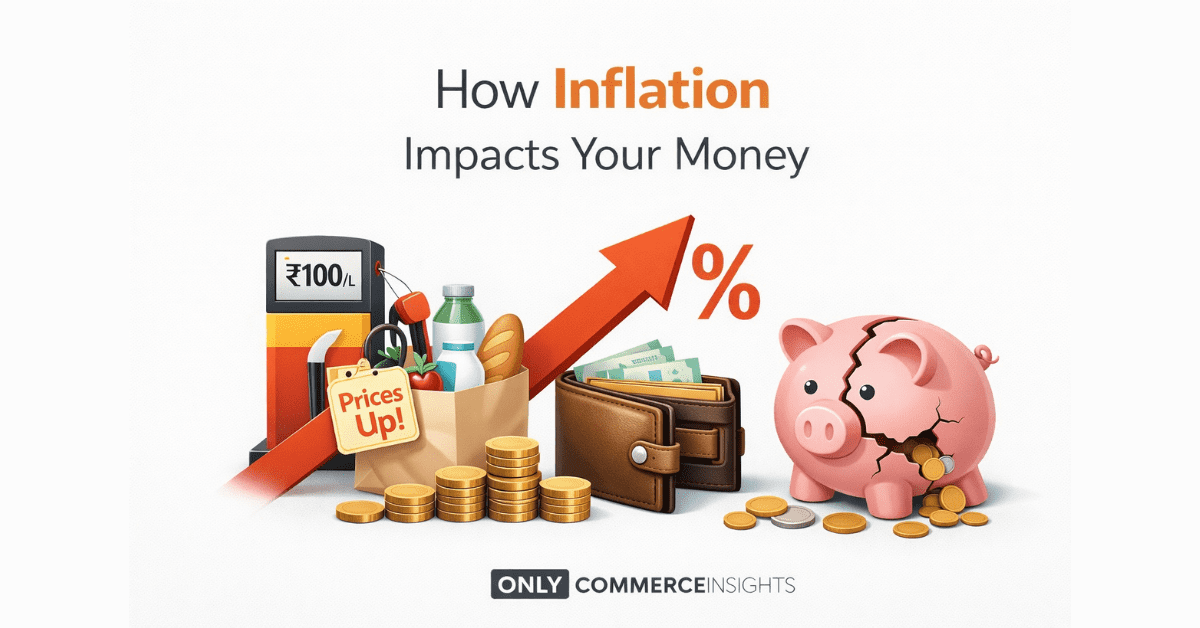

Inflation reduces the purchasing power of your money over time. This article explains how rising prices affect savings, expenses, and overall financial planning. Learn why managing money wisely is important during periods of inflation.
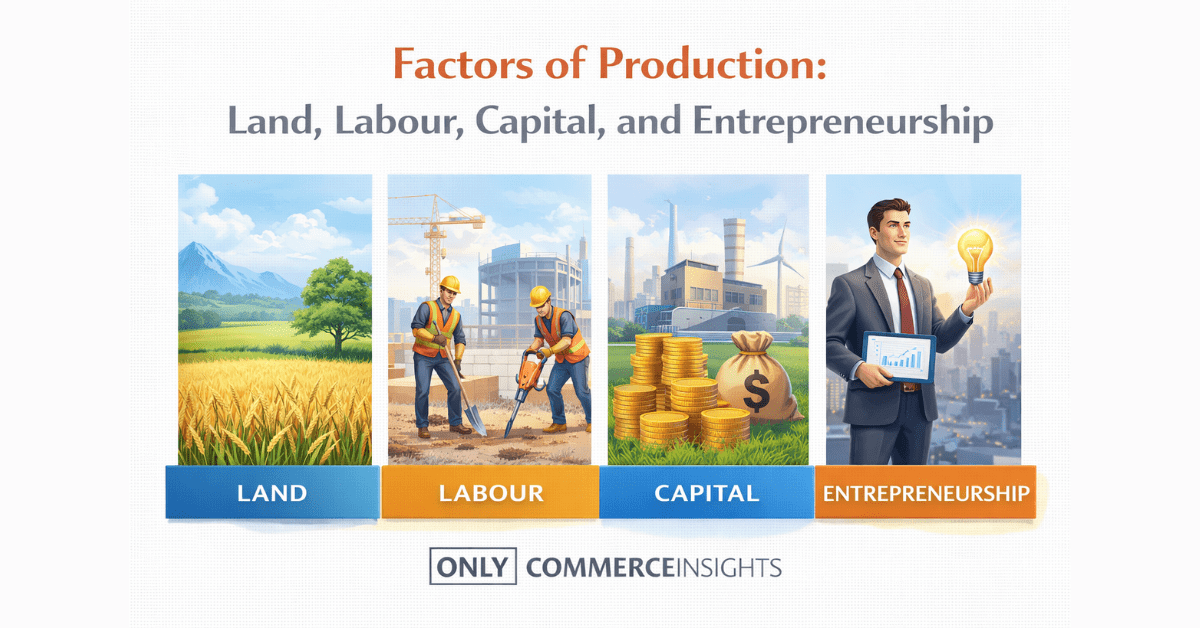
Factors of production are the basic resources needed to produce goods and services in an economy. This article explains land, labour, capital, and entrepreneurship in a simple and clear way. Learn how each factor plays an important role in business and economic growth.
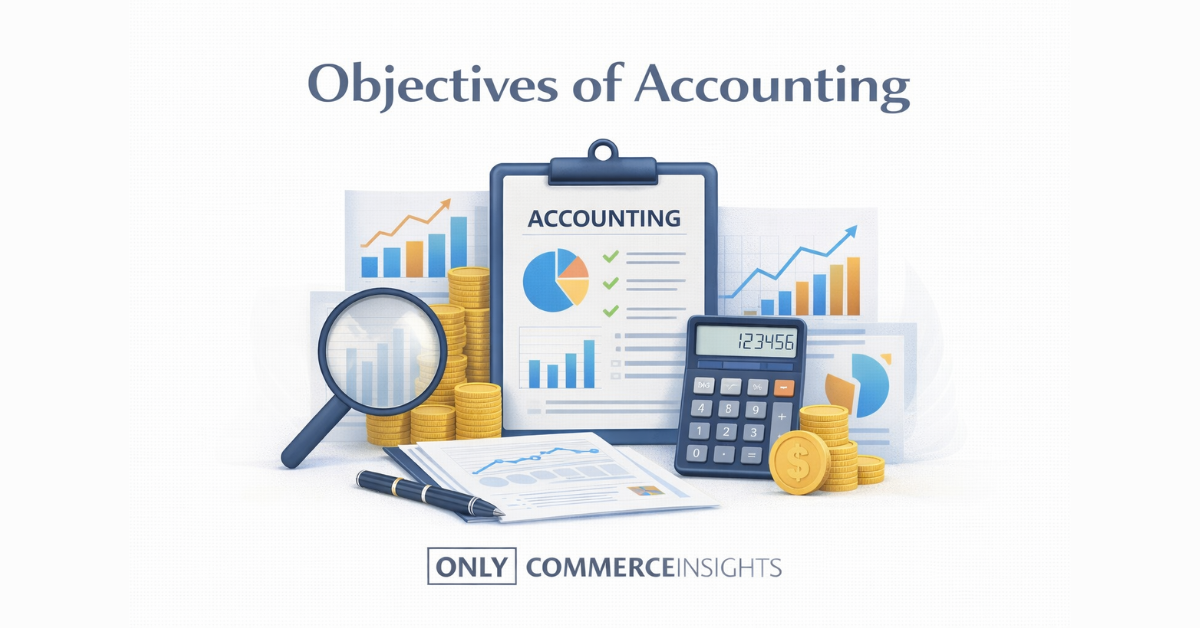
Accounting helps businesses record, analyze, and communicate financial information clearly. This article explains the main objectives of accounting in a simple and easy-to-understand way. Learn how accounting supports decision-making, performance evaluation, and financial transparency.
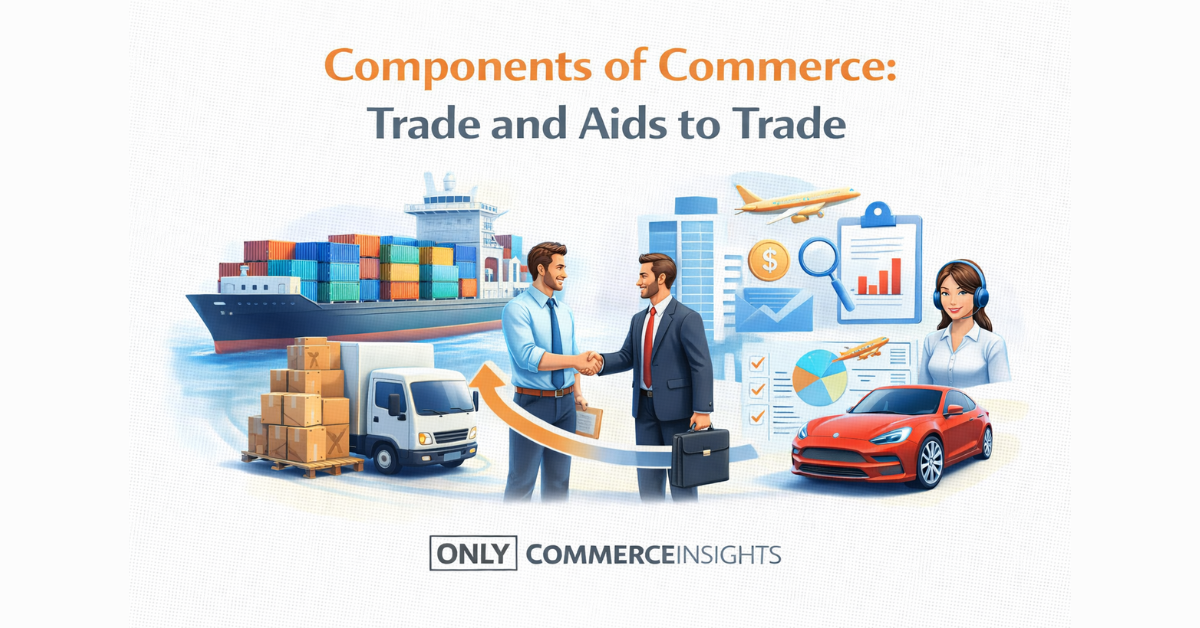
Commerce is made up of two key components: trade and aids to trade. While trade involves buying and selling goods, aids to trade support this process through services like transport, banking, insurance, and communication. This article explains how these components work together to ensure smooth business operations.
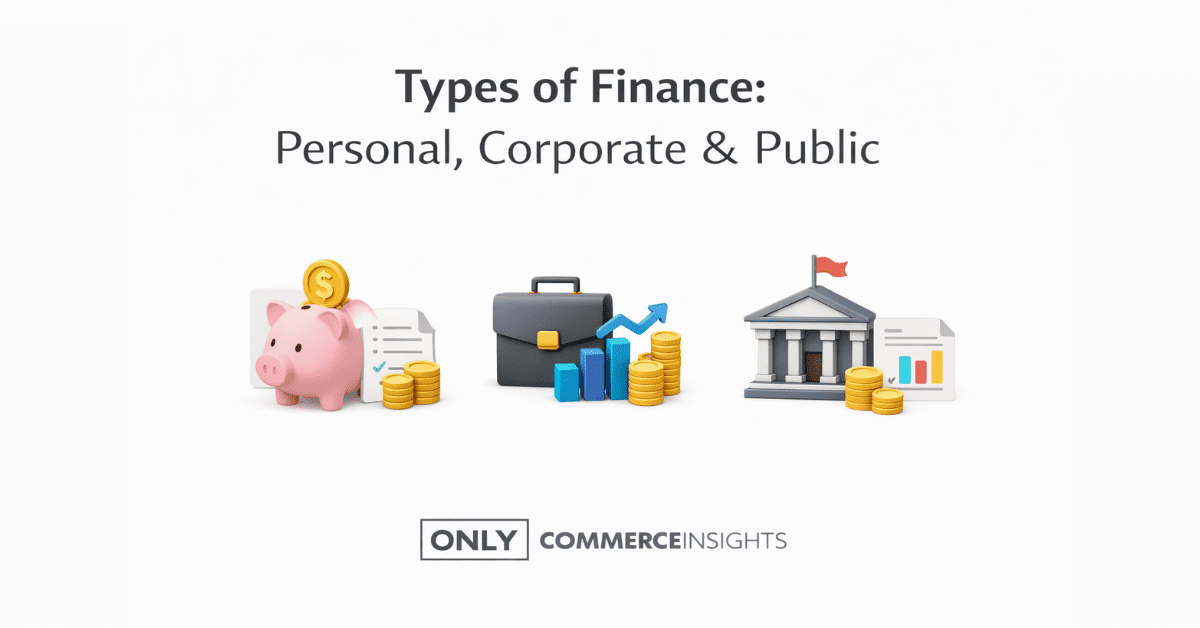
Finance isn’t just one concept—it operates at personal, business, and government levels. This guide breaks down personal, corporate, and public finance in a simple way so you can understand how money is managed in everyday life, companies, and the economy.
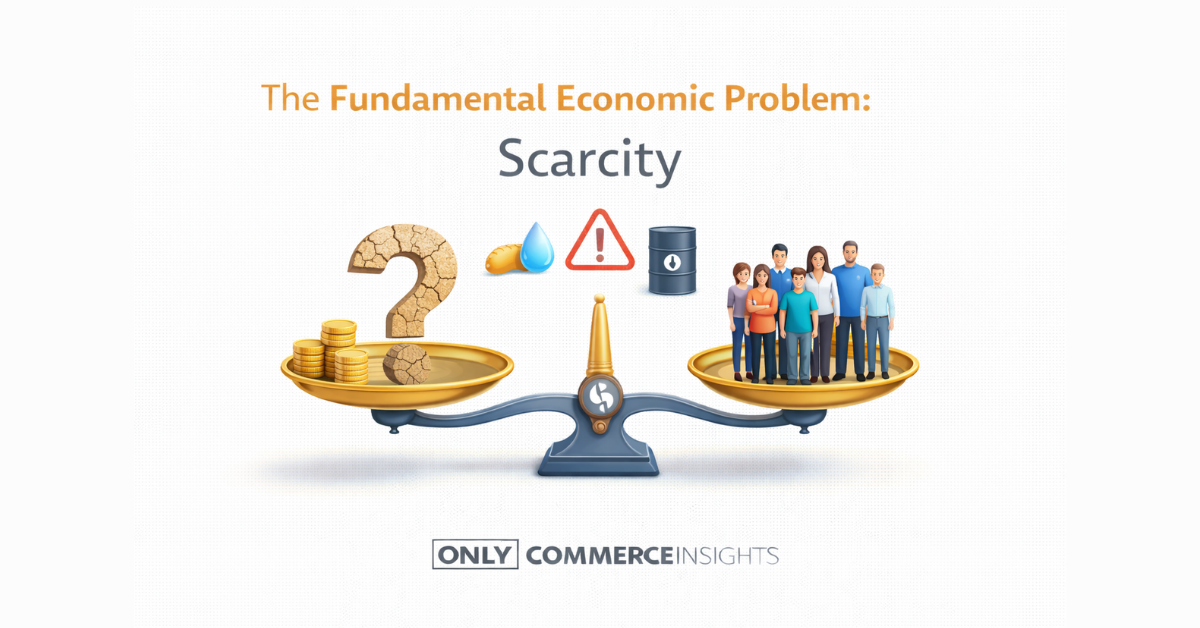
Scarcity is the fundamental economic problem that arises because human wants are unlimited while resources are limited.
This concept explains why individuals, businesses, and governments must make choices about how to allocate resources efficiently. Understanding scarcity helps explain key economic decisions, trade-offs, and opportunity costs in real-world economies.