

Money today is worth more than the same amount tomorrow.
This article explains the concept of time value of money in a simple way, showing why time, interest, and compounding play a crucial role in saving, investing, and financial decision-making.
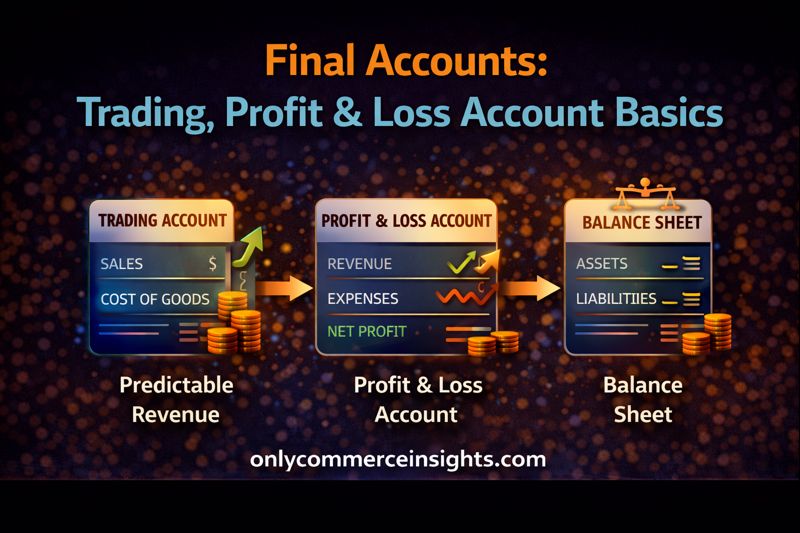
Final accounts show whether a business is profitable and financially stable.
This article explains the basics of final accounts, covering the trading account and profit & loss account, and how they help measure business performance.

Every accounting record begins with a business transaction.
This article explains business transactions using clear examples, helping you understand how sales, purchases, loans, and investments are recorded in accounting.

Accounting, finance, and economics are closely related—but they are not the same.
This article clearly explains the differences between accounting, finance, and economics, helping you understand what each field focuses on and how they work together.

Every business needs funds to start, survive, and grow.
This article explains the major sources of business finance, helping you understand where companies raise money and how each source supports business operations and expansion.

Prices in a market are not random—they are driven by demand and supply.
This article explains the concepts of demand and supply, showing how they interact to determine prices and quantities in real-world markets.