Zepto's 10-Minute Delivery: How Quick Commerce Actually Works
Two 19 year olds stuck in Mumbai during COVID asked one question: Zomato delivers food in 30 minutes : why does getting milk and eggs take half a day? The answer built a ₹22,623 crore business in 5 years. At its core, Zepto is a masterclass in how a business creates, delivers, and captures value.
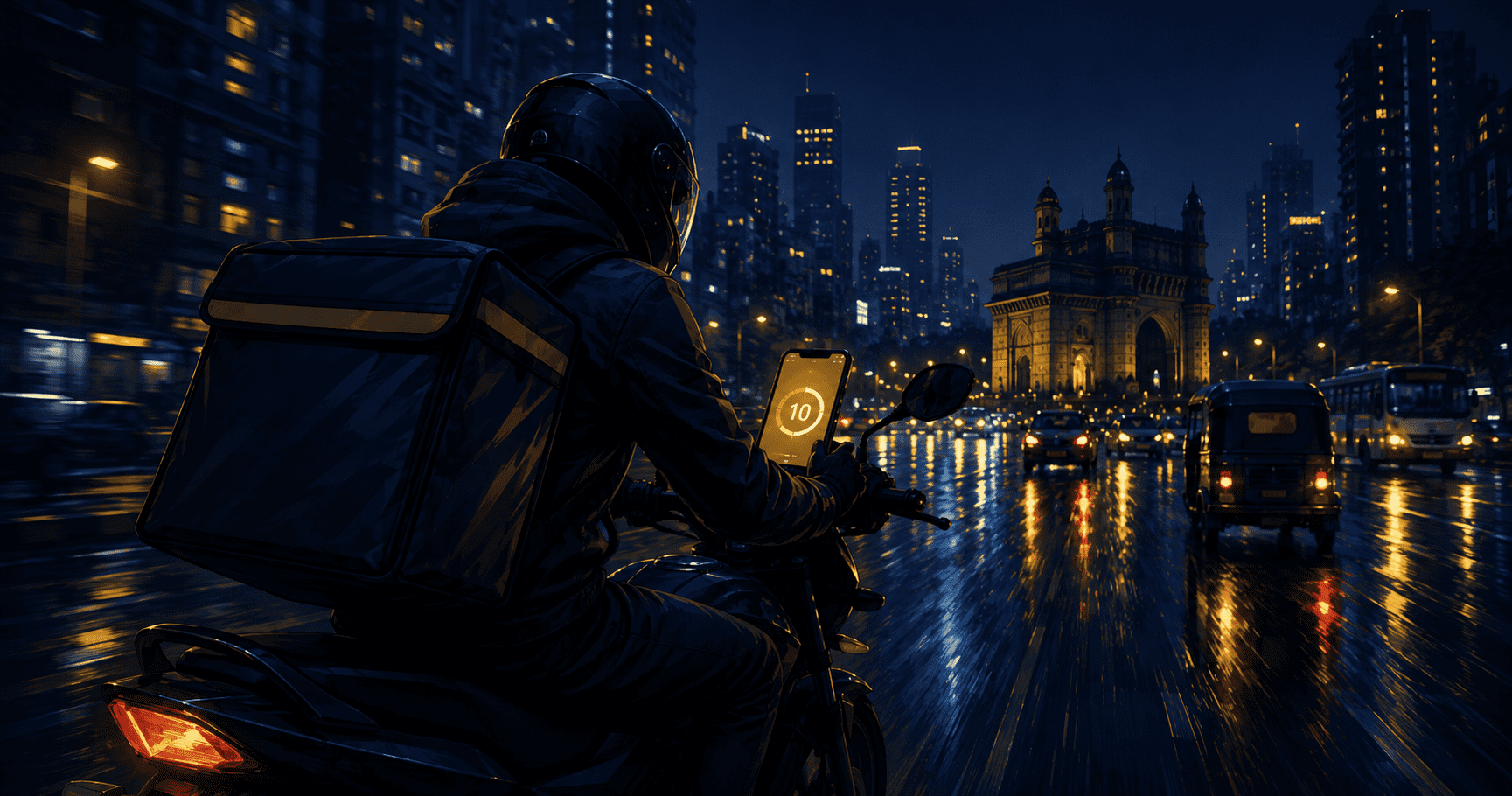
The 10-minute promise: infrastructure, not magic
10 Minutes Sounds Impossible. Why Does It Work?
Aadit Palicha and Kaivalya Vohra were 19 year old Stanford students stuck in Mumbai during COVID lockdowns. They kept waiting hours for grocery deliveries and asked one simple question: if Zomato can get food to your door in 30 minutes, why does getting milk and eggs take half a day?
The answer was not that people did not want fast grocery delivery. The infrastructure simply did not exist yet.
India's grocery market is enormous: roughly ₹50 trillion a year. But here is the wild part: as of 2024, kiranas (your neighbourhood uncle's small shop) still controlled 92.2% of it. Online grocery was less than 1% of total sales. If you want to understand how India's digital commerce transformation happened, we have covered it in detail. The demand was always there. The digital piece had barely started.
46% of people who use quick commerce have cut back on how much they buy from kiranas. 82% have moved at least a quarter of their regular kirana spending to apps like Zepto. That is not a trend. That is a structural change in how urban India shops.
Quick commerce hit $6.1 billion in GMV in 2024 and is projected to reach $40 billion by 2030. GMV (Gross Merchandise Value) is the total value of all orders flowing through the platform, not what Zepto keeps. Think of it as the total shopping happening on the app. By 2024, Blinkit, Zepto, and Swiggy Instamart controlled over 90% of quick commerce volume in major Indian cities. Zepto holds around 30% of that.
In revenue terms: ₹4,454 Cr in FY24, then ₹11,110 Cr in FY25, which is 150% growth in one year, and ₹22,623 Cr in FY26. They more than doubled revenue two years in a row.
The Dark Store Model: Not a Warehouse, Not a Supermarket
A dark store is a warehouse you will never walk into. No signage outside. No shopping carts. No billing counters. The only people inside are pickers: employees whose entire job is to grab your items as fast as possible and hand them to a delivery rider.
Each dark store is roughly 2,000 to 4,400 sq ft. Think of it as a large 3BHK apartment converted into a mini-warehouse. It stocks around 2,500 to 3,000 SKUs (individual product variants). Zepto only stocks fast-moving essentials: milk, bread, eggs, snacks, personal care. If it does not sell fast, it does not belong in a dark store.
Location: each store sits within 2 to 3 km of dense residential areas. AI analyses population density, traffic patterns, and purchasing power before picking a spot. Average delivery distance has already come down from 2.05 km in FY24 to 1.78 km in FY26.
Layout: products are not arranged by category like a supermarket. Items are arranged by order frequency: the most bought products sit closest to the packing station. This alone saves seconds per order, and in a 10-minute window, seconds matter.
Result: order picking takes under 76 seconds. Average actual delivery time: 8 minutes 47 seconds.
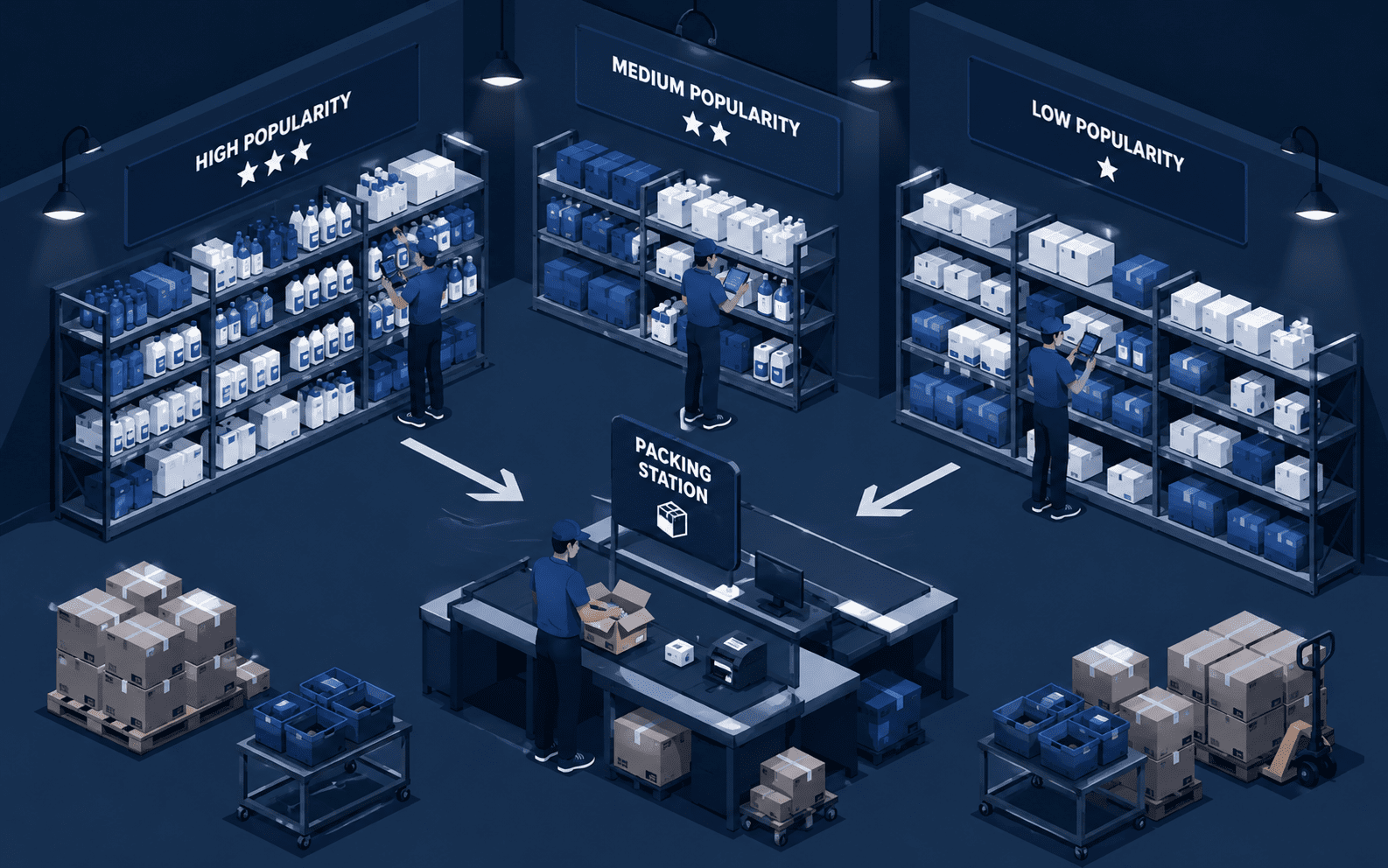
Inside a dark store: products arranged by order frequency, not category
The network has scaled fast: 337 dark stores in FY24, 1,139 by FY26. Each store handles more orders too: 1,325 orders per day in FY24, up to 1,677 by FY26. Fixed cost per order has nearly halved from ₹80.72 to ₹52.34 as stores get denser and more efficient. 50 to 60% of mature stores are already profitable at the store level.
The Unit Economics: Where the Money Lives and Leaks
Every time someone places an order on Zepto, the average bill is ₹430 to ₹470. That number is called AOV (Average Order Value). Most people are ordering milk, eggs, a packet of chips. Not a week's worth of groceries. That is the core tension in this business.
That ₹470 has to cover everything. Here is what comes out of it:
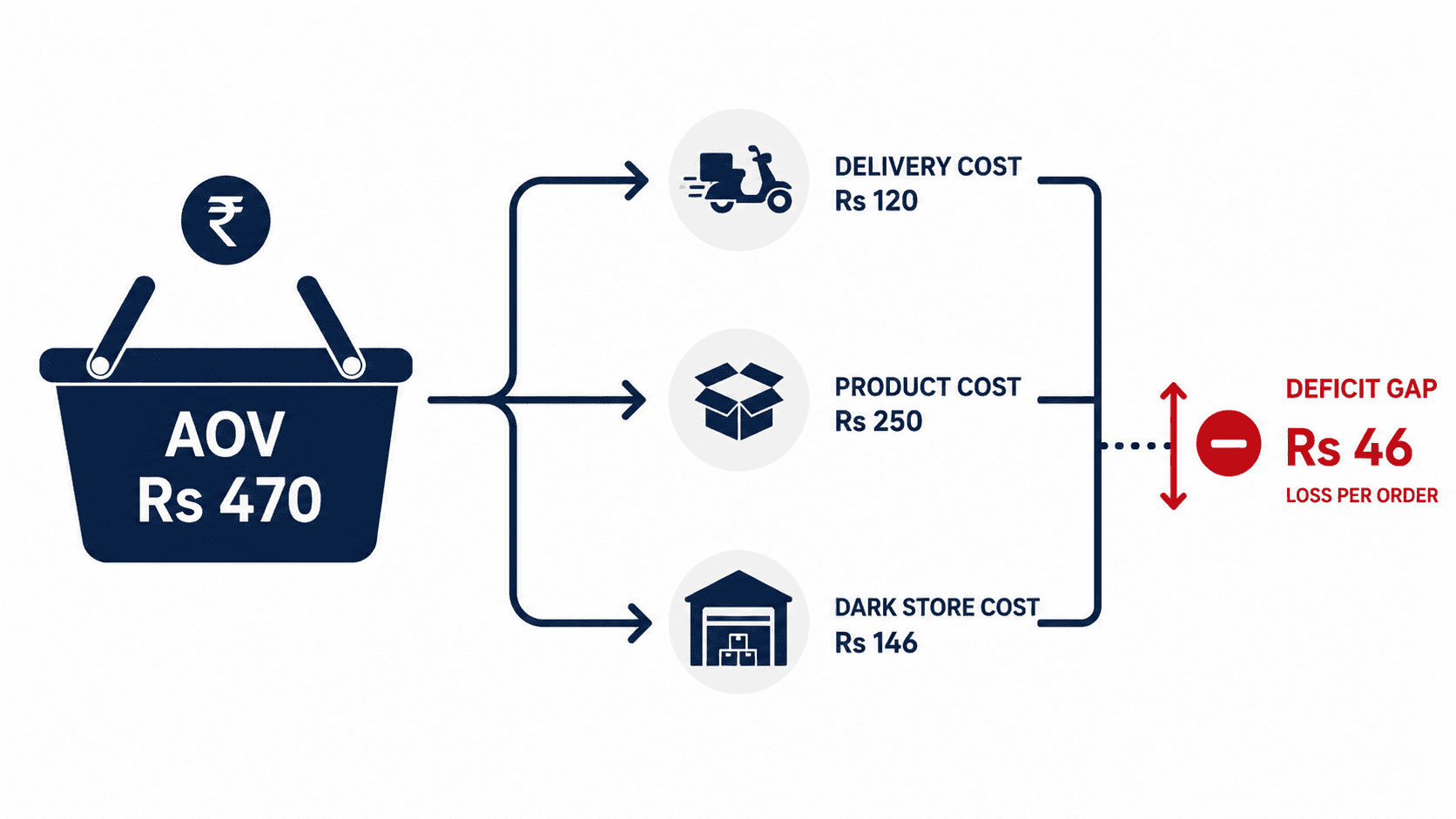
Every order: where the Rs 470 goes and why Rs 46 disappears
Analysts estimate Zepto needs an AOV closer to ₹1,600 per order to actually break even on fixed costs. Current AOV is less than a third of that. This is not a small gap.
Zepto is burning roughly ₹46 on every single order placed as of early 2026. Every order is currently a losing order. The bet is that as more people order more often, costs per order fall and AOV rises until the gap closes.
The one thing improving fast is marketing cost. In Q1 FY24, Zepto was spending ₹10.82 per order on digital marketing. By Q4 FY26, that is down to ₹1.01. The brand has scaled, people come back on their own, and customer acquisition is getting cheaper. Net loss in FY25 was ₹3,367 Cr, up 177%, but this largely reflects aggressive dark store expansion, not the core business getting worse.
How Zepto Actually Makes Money: Beyond Delivery Fees
If you think Zepto is a delivery company, you are looking at the wrong part of the business. Delivery fees and grocery margins are thin. The real money is elsewhere.
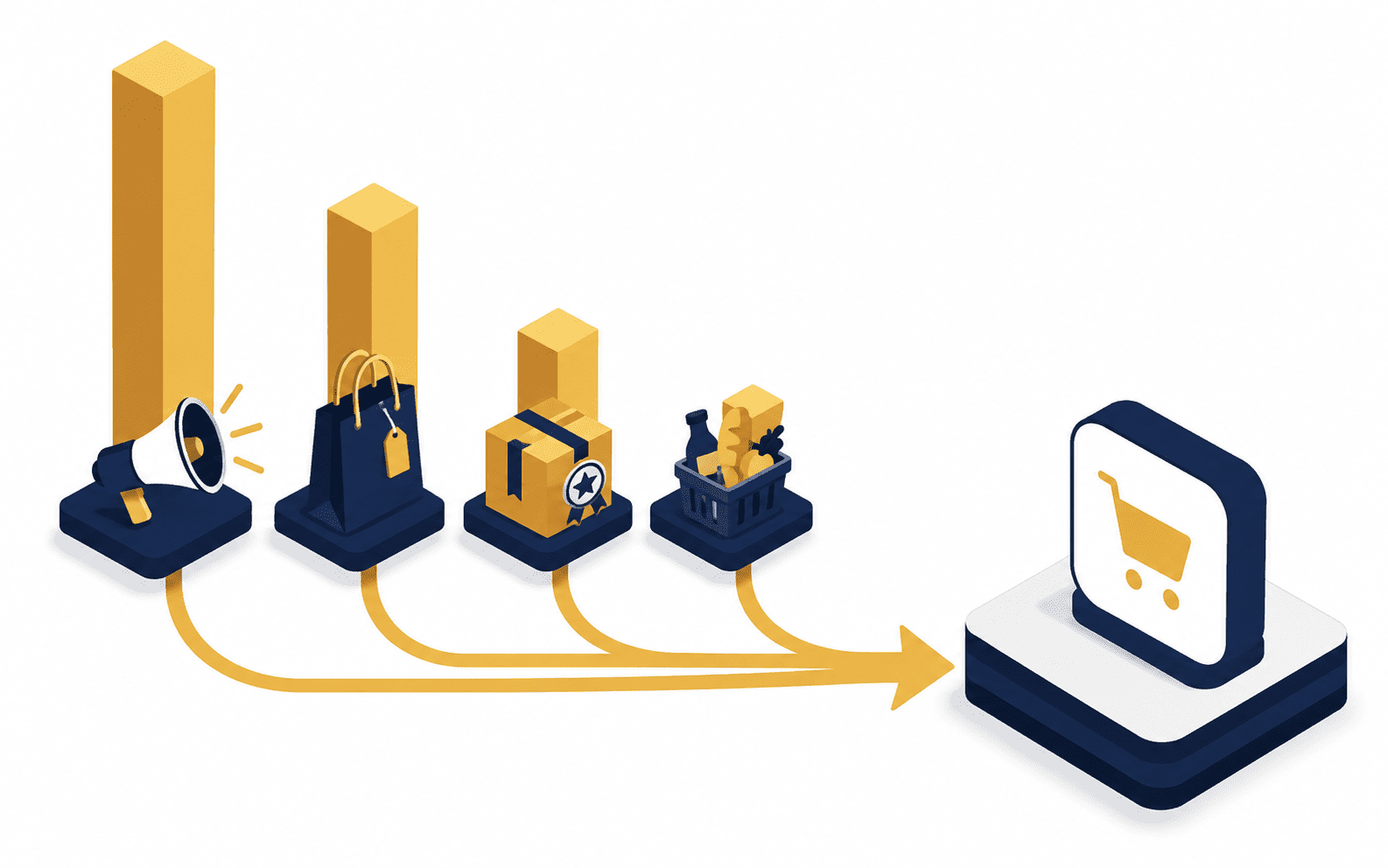
Multiple revenue streams flowing into one platform: ads lead, groceries lag
The key insight: grocery is the hook that brings people in. But ads, private labels, and Zepto Cafe are what make the business profitable. Zepto is not building a delivery company. It is building a retail media and data business on top of a logistics layer. This is the same logic behind Uber's asset-light model — own the platform, not the assets.
Ads have 70%+ margins because Zepto delivers nothing extra: an FMCG brand just pays to show up higher in the app. With 50 million monthly active users, that ad real estate is valuable. Ad revenue potential is modelled at $150 million annually and could erase operating losses by late 2026.
Why Quick Commerce Is Structurally Difficult to Pull Off
-
1The AOV Problem Cannot Be Advertised Away
Zepto needs ₹1,600 per order to break even. Current average is ₹470. You cannot run a campaign that fixes this. People use Zepto as an emergency top-up service: milk at 11pm, eggs for breakfast. They are not replacing their weekly sabzi mandi run with it. That behaviour change is not a marketing problem. It is a trust and habit problem that takes years to shift. Until AOV rises significantly, every order is a losing order.
-
2The Gig Worker Regulatory Risk
45% of delivery riders churn every year. Rider pay is rising 18% annually. And there is a regulatory cloud hanging over the entire model. If the Indian government reclassifies gig workers as full employees with benefits, Zepto's delivery cost jumps 20 to 35% overnight. That would completely break the unit economics that are already barely working. This is not an execution risk. It is a policy risk that Zepto has no control over.
-
3The Model Only Works in Dense Urban Areas
Quick commerce needs residential density to justify dark store rent and staff. It needs enough orders per day per store to bring down fixed cost per order. The moment you expand to Tier 2 cities (lower density, lower order frequency, longer delivery distances), the economics break. Zepto's growth story is essentially a Mumbai, Bengaluru, Delhi, Hyderabad story. Scaling beyond that is a fundamentally harder problem.
The Next 5 Years: What Has to Be True for Zepto to Win
Zepto lost ₹5,905 Cr in FY26. Revenue grew 150% in one year. So is it a failing business or a growing one?
Both, depending on which lens you use. At the order level: losing money on every delivery. At the company level: revenue is compounding faster than losses. Zepto is not failing. It is in the building phase, the same phase Amazon was in for its first nine years. Whether it becomes a scalable and sustainable business depends on what happens next.
But the building phase has to end. Three things have to happen for Zepto to become a durable profitable business:
-
1AOV has to rise naturally
Not through forcing people to spend more. Through expanding what Zepto sells. Electronics, beauty, fashion, Zepto Cafe. If people start using Zepto for more than emergency milk runs, basket size goes up without any behaviour forcing. Non-grocery GMV was already ₹1.1 billion in FY25.
-
2Ads and private labels have to scale
This is the Amazon playbook: use logistics to build an audience, then monetise that audience through advertising and owned brands. Zepto Ads at $150 million annual revenue potential with 70%+ margins could single-handedly erase operating losses. Private labels at 25 to 40% margins are the product equivalent.
-
3Densification has to continue
More dark stores in the same city means shorter delivery distances, lower cost per order, and faster delivery times. The flywheel: more stores, lower cost, better margins, more stores. Average delivery distance already fell from 2.05 km to 1.78 km in two years. The trend is moving in the right direction.
Can Zepto become the Amazon of hyperlocal India, owning logistics, data, advertising, and private labels simultaneously? Or does it remain a margin-thin delivery business that never escapes the AOV trap?
The answer depends on whether Indians start using Zepto for more than emergencies. That is the one variable Zepto cannot control through engineering or capital. It can only earn it over time.
Quick commerce works because of infrastructure, not magic. Dark stores placed within 2 km of dense neighbourhoods, AI-driven layouts, and a full-control delivery fleet make 10 minutes physically possible.
The business model works because of layering. Groceries bring people in. Ads, private labels, and Zepto Cafe are where the real margins live.
The risk is real. Every order still loses money. The AOV gap is large. Regulatory risk on gig workers is unresolved. And the model hits a wall outside dense urban India.
But the direction is right. Costs are falling per order. Marketing spend is down 90%. Mature stores are profitable. And the category itself has barely started: online grocery is still under 1% of India's total grocery spend.
Zepto is not building a delivery company. It is building the infrastructure layer for how urban India will shop for the next decade.